Wednesday, March 16, 2011

Tuesday, March 15, 2011
Monday, March 14, 2011

Friday, March 11, 2011


Hundreds dead after massive quake slams Japan

Hundreds dead after massive quake slams Japan
TOKYO — A magnitude 8.9 earthquake — the biggest in modern Japanese history — slammed the island nation's eastern coast Friday, unleashing a 23-foot tsunami that swept boats, cars, buildings and tons of debris miles inland and prompting a "nuclear emergency."
Hours later, the tsunami hit Hawaii and warnings blanketed the Pacific, putting areas on alert as far away as South America, Canada, Alaska and the entire U.S. West Coast.
According to police, 200 to 300 bodies were found in the northeastern coastal city of Sendai. The death toll was likely to continue climbing given the scale of Friday's disaster.
TV footage taken from a military plane showed fires engulfing a large waterfront area in northeastern Japan. Houses and other buildings were ablaze across large swathes of land in Kesennuma city in Miyagi prefecture, near Sendai city, public broadcaster NHK showed. The city, with a population of 74,000, has residential, light industry and fishing areas.
According to reports, police told the Kyodo news agency that a passenger train with an unknown number of people aboard was missing in one coastal area.
The government ordered thousands of residents near a nuclear power plant in Onahama city to evacuate because the plant's system was unable to cool the reactor. The reactor was not leaking radiation but its core remained hot even after a shutdown. The plant is 170 miles northeast of Tokyo.

'Major damage in broad areas'
Overall, dozens of cities and villages along a 1,300-mile stretch of coastline were shaken by violent tremors that reached as far away as Tokyo, hundreds of miles from the epicenter.
Advertise | AdChoices"The earthquake has caused major damage in broad areas in northern Japan," Prime Minister Naoto Kan said at a news conference.
Video: Video shows devastating Japan earthquake
Even for a country used to earthquakes, this one was of horrific proportions because of the tsunami that crashed ashore, swallowing everything in its path as it surged several miles inland before retreating. The apocalyptic images of surging water broadcast by Japanese TV networks resembled scenes from a Hollywood disaster movie.
Large fishing boats and other sea vessels rode high waves into the cities, slamming against overpasses or scraping under them and snapping power lines along the way. Upturned and partially submerged vehicles were seen bobbing in the water. Ships anchored in ports crashed against each other.
The highways to the worst-hit coastal areas were severely damaged and communications, including telephone lines, were snapped. Train services in northeastern Japan and in Tokyo, which normally serve 10 million people a day, were also suspended, leaving untold numbers stranded in stations or roaming the streets. Tokyo's Narita airport was closed indefinitely.
'Really nerve-wracking'
Tomoko Koga, a 34-year-old translator and interpreter, tells msnbc.com she couldn’t see any damage from her house in Chiba, outside of Tokyo, but was watching reports of devastation on the news. “I don’t even know what to say. I feel sorry that I’m safe and OK because there are so many people affected by this disaster.”
Koga was waiting to hear back from her father, who was stranded in his office in Tokyo. “He texted us right after the earthquake that there wouldn’t be any way for him to come back home. But after that, we didn’t hear from him. It’s really nerve-wracking.”
Technolog: Google tool helps track and find Japan earthquake victims
Austrian Lukas Schlatter says he saw houses and cars moving when the quake struck Japan, and it was even hard for him to stand, “like I was a little bit drunk.”
Schlatter, a 22-year-old intern in the commercial section of the Austrian embassy in Tokyo, said there was a lot of shaking and books fell off shelves in their office.
“My Japanese co-workers were also scared because they said they had not experienced that strong of an earthquake in a long time,” he told msnbc.com in a Skype interview.

Houses washed away
Waves of muddy waters flowed over farmland near the city of Sendai, carrying buildings, some on fire, inland as cars attempted to drive away. Sendai airport, north of Tokyo, was inundated with cars, trucks, buses and thick mud deposited over its runways.
Advertise | AdChoicesMore than 300 houses were washed away in Ofunato City alone. Television footage showed mangled debris, uprooted trees, upturned cars and shattered timber littering streets.
The tsunami roared over embankments, washing anything in its path inland before reversing directions and carrying the cars, homes and other debris out to sea. Flames shot from some of the houses, probably because of burst gas pipes.
"Our initial assessment indicates that there has already been enormous damage," Chief Cabinet Secretary Yukio Edano said. "We will make maximum relief effort based on that assessment."
He said the defense ministry was sending troops to the quake-hit region. A utility aircraft and several helicopters were on the way.


Thursday, March 10, 2011

Wednesday, March 9, 2011
The story of StolenLuxury

Stolenluxury.com
The significance of Stolen Luxury goes deeper than just another brand, another look, another consumer commodity. Dedicated to setting ourselves apart from the multitudes of brands, Stolen Luxury is based on a mixture of statements, in the form of graffiti base visuals and street references. Our motivation is simple: style and individuality with the focus always being quality over quantity, no matter what the medium may be. Stolen Luxury began with a strong and varied base of talented artists and creative minds with unfathomable talent in the areas of fine art, graphic design, music, street art, and the list grows exponentially with the brand.
As our passion continues to grow, our success will grow with it. Our dedication and originality are single handedly the dividing factors that will set us apart.


Friday, March 4, 2011


CHICAGO turns 174yrs old

Happy Birthday Chicago!
(CHICAGO HISTORY MUSEUM) Chicago Facts
In November of 1836, a committee was formed to apply to the state legislature for a city charter. A charter was prepared by this committee and submitted to the people for approval at a mass meeting at the Saloon Building on Monday, January 23, 1837. After slight alterations, the charter was approved and sent to the legislature. There, after certain amendments, it was enacted into law on March 4, 1837. Thus, on this date, Chicago became a city, population of 4,170. William B. Ogden was chosen the first Mayor of Chicago; Isaac N. Arnold, clerk; and Hiram Pearsons, treasurer.
Friday, March 4, 2011. Chicago is looking good for her age. On this day in 1837, the City of Chicago was incorporated with a population of 4170. Today's Chicago is hovering around 2.9 million citywide--add the rest of Cook County and you're talking over 5.3 million. Now that's something to celebrate! Check out some of the celebrations below and some milestones in Chicago history.
Special Events.
Chicago History Museum is throwing a party in honor of Chicago's 174 b-day. The event, complete with a very special birthday cake by Bleeding Heart Bakery and entertainment, kicks off at 11a.m. with special guests from the American Indian Center of Chicago. Other invited guests include those who share the same birthday, March 4, as well as city officials. Birthday celebrants will receive an honorary certificate signed by the Mayor and share birthday cake which is free for all guests along with FREE MUSEUM ADMISSION. Stick around after the celebration to tour the permanent and special exhibits at this Chicago treasure. On the First Friday of each month The Chicago History Museum features an installation called Unexpected Chicago. This is a rare opportunity to see some unique pieces from history that is not normally on display. The artifact on display in March is the revolver that belonged to Owen Brown, son of the famed abolitionist, John Brown. 1601 N. Clark St.
Chicago Timeline.
1837. William B. Ogden was elected mayor.
1837. C. D. Peacock jewelers was founded.
1847. The first issue of the Chicago Tribune was published (June 10),
1848. The Chicago Board of Trade opened at 101 S. Water Street (April 3).
1864. Lincoln Park was designated to be a recreational area.
1864. The Union Stock Yards were established in a one-square-mile area at Halsted St. and Exchange Ave. (closed in 1971).
1871. The Great Chicago Fire (October 8 and 9).
1874. First animal purchased for the Lincoln Park Zoo was a bear cub for $10.
1879. The Art Institute of Chicago was founded.
1891. "The El" began operation.
1893. The World's Columbian Exposition along Chicago's lakefront attracted 27 million visitors during its run from May through October.
1897. The Marshall Field's Clocks were installed.
1900. The Chicago River was reversed.
1903. The Iroquois Theater fire killed 600.
1915. The Eastland Disaster on the Chicago River at LaSalle and Clark Sts. resulted in the death of 844 passengers on the excursion steamer while it was still moored at the dock.
1919. The First Fannie May Candy store opened.
1924. The Wrigley Building was completed.
1925. The Tribune Tower was completed.
1939. First night game at Comiskey Park (White Sox vs. Browns, Sox won).
1942. The tradition of organ music as baseball games began when the first organ was
installed at Wrigley Field.
1959. Second City founded on N. Wells St. in a former Chinese laundry.
1960. The first Playboy Club, featuring bunnies opened.
1969. John Hancock Center was built.
1971. Sears Tower opened.
1980. First Taste of Chicago was held--a one-day event on the 4th of July.


Thursday, March 3, 2011




The Layup

APRIL 09, 2011 - LOS ANGELES
www.freshpaintnyc.blogspot.com
THE LAYUP
APRIL 09, 2011
6:30pm - 10:30pm
Los Angeles, CA
One night only!
THE LAYUP
Giveways at the door from the sponsors.
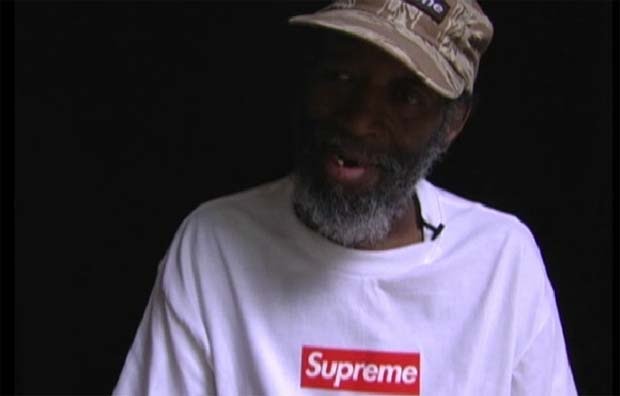
SUPREME NYC
03/03/2011
Web Shop Now Open
Web shop has opened with new Spring/Summer 2011 items.
http://www.supremenewyork.com

Subscribe to:
Posts (Atom)